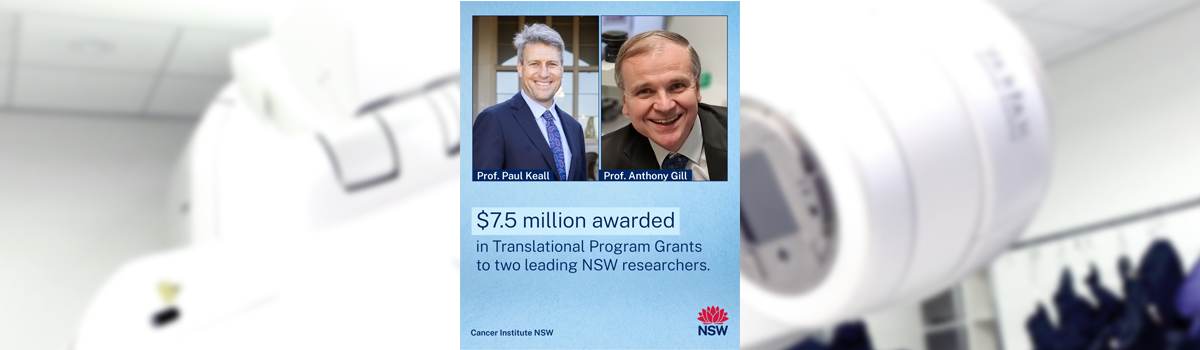
A $3.75M Translational Program Grant awarded by the Cancer Institute NSW marks a major step towards making access to advanced radiation therapy more equitable in NSW and internationally.
Read Cancer Institute NSW announcement here: https://www.cancer.nsw.gov.au/what-we-do/news/7-5-million-for-cancer-research
Read the NSW Health Media Release: https://www.health.nsw.gov.au/news/Pages/20260424_00.aspx
Led by Professor Paul Keall, the program will be developing technologies that transform existing radiotherapy and imaging systems so that they can deliver the high quality outcomes currently confined to high-end specialist treatment systems that remain out of reach for the majority of patients in NSW and globally.
Radiotherapy is recommended for around half of all people diagnosed with cancer worldwide. New treatment systems have demonstrated the ability to reduce these side effects by up to 50%, but access to these systems and their benefits remains limited due to costly infrastructure, specialised equipment, or invasive techniques that are only available in select centres.
This creates a divide between what is scientifically possible and what is possible to deliver in standard care.
The newly funded program is designed to bridge the space between these two treatment realities. Its central aim is to develop a suite of low-cost, scalable radiotherapy innovations that can be implemented across existing treatment systems, improving outcomes without requiring wholesale infrastructure upgrades.
Three themes, one goal: equitable cancer care
The program is organised into three interconnected research themes, each targeting a different aspect of the radiotherapy pathway. By joining forces as a program, the work in each within each theme can happen not as a series of isolated research projects, but as part of a coordinated pipeline of innovation, designed to reach patients.
AI-enabled pinpoint accuracy radiotherapy
This work aims to bring sub-millimetre tumour targeting to standard radiotherapy machines through AI-driven real-time tracking. By accurately identifying tumour position during treatment, clinicians can deliver higher radiation doses to cancer cells, while minimising exposure to surrounding healthy tissue.
Targeting resistant tumours with advanced imaging
This work aims to translate low-field, portable MRI into a practical tool for radiotherapy planning and adaptation. By enabling hypoxia and metabolic imaging in more settings, clinicians can better understand tumour behaviour and adjust treatment accordingly.
The use of portable systems also opens the door to delivering advanced imaging capabilities in regional and resource-limited centres—an important step toward reducing disparities in care.
Protecting healthy tissue with functional imaging
In cancers such as lung and liver cancer, outcomes are often constrained not by the ability to treat the tumour, but by the risk of damaging surrounding organs.
Functional imaging techniques such as ventilation imaging for the lung can map which areas of tissue are most important to save, allowing clinicians to avoid them during treatment.
This program will advance CT- and MRI-based functional imaging methods that do not rely on expensive or specialised equipment.
Looking ahead
As the program progresses, it is expected to deliver a suite of clinically validated imaging and treatment technologies that improve tumour control, reduce toxicity, and expand access to advanced care.
Read Cancer Institute NSW announcement here: https://www.cancer.nsw.gov.au/what-we-do/news/7-5-million-for-cancer-research
Read the NSW Health Media Release: https://www.health.nsw.gov.au/news/Pages/20260424_00.aspx