
Scroll down to read about our speakers, listed here in order of presentations.
| 2:00-2:05pm | Julie McCrossin + Miriam Cavanagh Welcome, Acknowledgement of Country |
| 2:05-2:10pm | Paul Keall – Introduction to the Image X Institute |
| 2:10-2:20pm | Sandra Turner – What is World Radiotherapy Awareness Day? |
| 2:20-2:30pm | Miriam Cavanagh – First Nations Health Challenges |
| 2:30-2:40pm | Owen Dillon – New mobile lung cancer screening technology |
| 2:40-2:50pm | Chandrima Sengupta – Real-time image-guided radotherapy for every patient: Halving treatment side effects |
| 2:50-3:00 pm | David Waddington – What low-cost MRI can teach radiotherapy about becoming accessible |
| 3:00-3:30pm | Panel Discussion – Miriam, Chandrima, David, Sandra. |
| 3:30-4:00pm | Break + refreshments on Level 4 |
| 4:00-4:10pm | Mei Ling Yap – Global challenges to access radiotherapy |
| 4:10-4:20pm | Lee Hunt – Consumer perspective on challenges and opportunities for accessible radiotherapy |
| 4:20-4:30pm | Jeremy Booth – Accessible technology from bench to bedside: a review of first-in-human clinical trials between RNSH and Image X |
| 4:30-4:40pm | Ajeet Mishra – Regional radiotherapy: Challenges, opportunities, and clinical trial participation |
| 4:40-4:50pm | Trang Nguyen – The KIM journey, from concept to globally available product |
| 4:50-5:00pm | Emily Hewson – The future roadmap of accessible adaptive radiotherapy technology |
| 5:00-5:30pm | Panel Discussion: Mei Ling, Lee, Trang, Ajeet. |
| 5:30-6:30pm | Drinks, canapes on Level 4 |
Julie McCrossin – MC
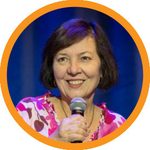
Julie McCrossin AM is a veteran radio and television broadcaster. After over 20 years as a presenter on ABC Radio National, ABC TV and Network Ten, Julie is now a freelance webinar host, podcaster and MC. Julie was treated for stage four, HPV-related oropharyngeal cancer in 2013. She is a patient advocate and member of Cancer Voices SA. Julie holds qualifications in the arts, education and law. In 2019, she was appointed a Member of the Order of Australia for significant service to the community, particularly through LGBTIQ advocacy and to broadcast media.
Prof Paul Keall
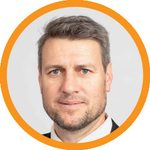
Professor Paul Keall is the Director of the Image X Institute at the University of Sydney, where he leads research into novel cancer imaging and targeted radiation therapy methods. He previously directed the Radiation Physics Division at Stanford University and received an Australian Fellowship in 2010. His research has produced more than 400 publications, 42 patents, 20 licences and three start-up companies, with several technologies translated into clinical practice. He works closely with clinical and industry partners to improve cancer treatment and patient outcomes.
Presentation: Introduction to the Image X Institute
The Image X Institute at the University of Sydney is a world-leading centre for innovation in radiation therapy and medical imaging technologies. Our mission is to improve lives by inventing and advancing new ways to image and treat disease. We’re working on new technologies for medical imaging and targeted radiation therapy. We engage with industry, hospitals, international collaborators and universities to forge relationships that help take our projects from lab bench to patient bedside. Our impact includes new scientific knowledge, clinical trials, policy and guideline papers, patents, and products that are being used around the world to image and treat patients today.
Prof Sandra Turner
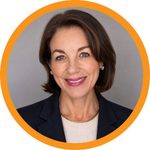
Sandra is a staff specialist in radiation oncology at Westmead Hospital and a Clinical Professor at the University of Sydney. She has had several roles within the ANZ College of Radiologists (Faculty of Radiation Oncology, FRO) including FRO Council, Chair of Education Committee and Chief Examiner (Chief Censor). Sandra is also the Clinical Lead of Professional Development at WSLHD, her main role being the design and delivery of interdisciplinary clinician leadership programs across the District. She is Director of the joint ESTRO-CARO-RANZCR leadership course, Foundations of Leadership on Radiation Oncology (FLiRO). Sandra is passionate about raising awareness of radiotherapy as a vital, yet underused and poorly understood, treatment for cancer. Aligned with this passion, she was the Founding Lead of the Targeting Cancer campaign, and more recently, co-chair of World Radiotherapy Awareness Day movement.
Presentation: What is World Radiotherapy Awareness Day?
World Radiotherapy Awareness Day (WRAD), marked on September 7th came into being in 2025. This talk will describe the reasons for creating the day and the expected and desired impacts. The presentation will tell the story of translating the idea into action and how the global community has enthusiastically engaged. The 2025 launch highlights and the escalation of events and activity in the lead-up to 2026 will be discussed. We will explore WRAD’s next priorities and how the audience can get involved in the campaign.
Ms Miriam Cavanagh
Ms Miriam Cavanagh is a proud Aboriginal and Torres Strait Islander professional working in the health/education sectors, recognised for her dedication, leadership, and commitment to improving health and wellbeing outcomes for individuals, families, and rural and remote communities. Throughout her career, Miriam has developed strong skills in communication, collaboration, relationship building, and problem-solving.
She is known for her thoughtful, inclusive, and culturally respectful approach, as well as her ability to work effectively with colleagues, clients, stakeholders, and community members.
Miriam brings a strong work ethic and commitment to continuous learning and professional development to her work. Her professional practice is grounded in integrity, respect, cultural connection, and a commitment to meaningful outcomes. She is passionate about contributing her knowledge, experience, and cultural perspective to initiatives that strengthen health services, empower communities, and support improved outcomes for Aboriginal and/or Torres Strait Islander peoples.
Presentation: First Nations Health Challenges
In rural and regional areas, accessing healthcare can be difficult for reasons that go beyond whether a service exists. Distance, transport, limited specialist services, mental health support, and the availability of culturally safe and trauma-informed care can all create barriers. For some people, accessing healthcare can mean travelling long distances, leaving community, or waiting longer than they should for the support they need.
These experiences can have a real impact on whether people feel comfortable accessing healthcare and whether they feel heard and understood when they do. They also highlight how disadvantage and systemic barriers continue to contribute to health inequalities experienced by many Aboriginal and/or Torres Strait Islander peoples.
For myself, improving health outcomes are about more than providing services. It means listening to our many rural and remote communities, respecting cultural knowledges and lived and living experiences, and involving always many Aboriginal and/or Torres Strait Islander peoples and non-indigenous peoples as well in decisions about their own healthcare.
Sharing these experiences through WRAD 2026 is important because these challenges are not simply historical. They continue today. It’s an opportunity to raise awareness and emphasise the key importance of communication going both ways, within healthcare that is accessible, culturally safe, trauma-informed and genuinely community-led.
Dr Owen Dillon
Dr Owen Dillon focuses on Cone Beam Computed Tomography (CBCT) with a particular emphasis on estimating and incorporating patient motion. He is primarily involved in the ADAPT clinical trial, improving lung cancer radiotherapy imaging while reducing imaging time 60% and imaging radiation 85%.
Dr Dillon’s research also involves robotic systems in surgical theatres and implementing 3D imaging capabilities on 2D systems. His background is in Image Reconstruction, Inverse Problems and Bayesian Statistics.
Presentation: New mobile lung cancer screening technology
The National Lung Cancer Screening Program (NLCSP) aims to acquire 3D x-ray images of all high-risk Australians to catch lung cancer in the early stages where it is most easily treated. Conventional 3D x-ray scanners (CT) are large, heavy, expensive devices with complex installation and maintenance requirements that restrict them to large urban centres, meaning many rural and regional Australians live prohibitively far from one to get a screening scan. In this talk I will present a novel x-ray device (Quantum CT) that is small and light enough to be installed in commercial vans and run on regular power outlets, developed to bring the benefits of the NLCSP to these rural and regional patients.
Dr Chandrima Sengupta

Dr Chandrima Sengupta is a Cancer Institute Early Career Fellow at the Image X Institute, University of Sydney. She currently leads the real-time image-guidance research stream at Image X and the implementation in clinical trials.
Presentation: Real-time image-guided radiation therapy for every patient: Halving treatment side effects
This talk presents the clinical translation of a whole-body, real-time tumour tracking framework designed to improve the accuracy of radiotherapy across multiple cancer sites. It explores how routinely available radiotherapy imaging and artificial intelligence can be combined to continuously localise tumours during treatment without relying on specialised treatment platforms. Drawing on developments across prostate and liver, the talk follows the pathway from algorithm development and validation to clinical implementation. The overarching goal is to create a scalable, software-based targeting framework that can be deployed across conventional radiotherapy systems, making real-time image guidance broadly accessible to patients.
Dr David Waddington
Dr David Waddington (PhD 2018) is an NHMRC Emerging Leadership Fellow and Associate Director (Strategy & Researcher Development) at the Image X Institute, University of Sydney. He develops AI and MRI technologies for cancer diagnosis and treatment, spanning portable low-field MRI and real-time MRI-guided radiotherapy. His 41 peer-reviewed publications, including first-author papers in Nature Communications and Science Advances, have been cited over 1,700 times. He has received a Fulbright Scholarship (Harvard University), a University Medal in Physics (UNSW Sydney), a 2023 ISMRM Junior Fellowship, three AAPM Best in Physics awards (top 0.5%), and three ISMRM Summa Cum Laude awards (top 5%). He has given high-profile talks at international conferences and TEDx.
Presentation: What low-cost MRI can teach radiotherapy about becoming accessible
We all want the best medical treatment available for ourselves and those we care about. If forced to choose between an affordable technology and one that delivers higher quality care, those of us that can afford it will pay – cost alone cannot drive adoption. Here, I will discuss how the tension between accessibility and quality has been navigated in the development of new low-cost Magnetic Resonance Imaging (MRI) technology. Accessible MRI technologies are increasingly used because they address clinical problems – such as bedside imaging in the ICU – that conventional MRI technologies cannot solve. Similarly, I will argue that if low-cost radiotherapy is to succeed, it will be because it solves a clinical problem and not because of the price. Aligning accessible technologies with a higher quality of care is essential to achieving radiotherapy outcomes that aren’t determined by a postcode.
A/Prof Mei Ling Yap
Associate Professor Mei Ling Yap is a clinician-researcher, Head of the Cancer Program at the George Institute for Global Health and Director of CCORE, Ingham Institute of Applied Medical Research. She is a Staff Specialist Radiation Oncologist in South Western Sydney Local Health District, where she works with people diagnosed with lung or breast cancer and their families. A/Prof Yap is an NHMRC Emerging Leadership Fellow and holds conjoint academic appointments at UNSW Sydney and Western Sydney University. Her work supports cancer-service capacity building in low and middle-income countries across the Asia-Pacific region. She received the 2024 NSW Premier’s Award for Improving Equitable Outcomes and the 2025 Jeannie Ferris Cancer Australia Award. She serves on the editorial board of JCO Global Oncology and Journal of Medical Imaging and Radiation Oncology.
Presentation: Global challenges to access radiotherapy
Radiation therapy is an integral part of comprehensive cancer care, with its ability to improve the survival of people diagnosed with cancer, well as improve quality of life. Yet, the availability of radiation therapy is inequitable globally, both between and within countries. This presentation will highlight the disparities in access to radiation therapy, particularly in low- and middle-income settings. It will also highlight the need for radiation therapy to be prioritised within national cancer control planning. Lastly, it will discuss the importance of regional partnerships, both in radiation therapy capacity building and workforce training, as well as strengthening radiation oncology data systems for quality improvement and research.
Lee Hunt
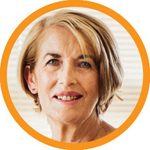
Lee was diagnosed with Grade 3 breast cancer in 2005. Following surgery, she undertook an 18-month therapy program but suffered a recurrence 13 years later. She has experienced long-term toxicities from two of her treatments.
Following a 40-year career in education, she joined Cancer Voices and was a member of the executive group for eight years, leading the Consumers Involved in Research program. She has advocated for and supported successful campaigns for radiation therapy facilities at Dubbo Hospital and other regional locations around Australia.
Lee was the consumer member of the Faculty of Radiation Oncology Council (RANZCR) for six years and the Targeting Cancer Management Committee involving support of Targeting Cancer activities. She is a member of the Radiation Oncology Roundtable that meets with the Department of Health and the MBS Radiation Therapy Implementation Group.
Cancer research is Lee’s passion, with her being a member of several cancer research projects and clinical trials. She has a particular interest in toxicities associated with cancer therapies. Lee has authored and co-authored several publications.
Lee has presented at many conferences and other fora, including the COSA Survivorship conference, the Australian Society for Medical Research NSW, RANZCR’s Annual Scientific Meeting, the TROG ASM, and the National Particle Therapy Symposium. She has made presentations to early researchers at Cure Cancer, Sydney University and NSW Cancer Council.
Presentation: Consumer perspective on challenges and opportunities for accessible radiotherapy
Historically, radiation therapy centres in many countries were placed in larger populated towns and cities. For patients living in rural and remote locations, distance has been an important barrier to the access and utilisation of radiation therapy services. Often, patients with no access to radiation therapy clinics are consistently more socioeconomically disadvantaged.
Lee looks at and discusses the challenges of accessing radiation therapy in Papua New Guinea, the need for adequate staffing levels for the radiation oncology workforce in New Zealand and a lack of radiation cancer treatment access for over 50 million American cancer patients.
Prof Jeremy Booth
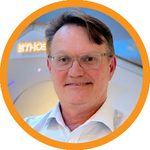
Professor Jeremy Booth is Head of Medical Physics at the Northern Sydney Cancer Centre, Royal North Shore Hospital, and a Professor in the School of Physics at the University of Sydney. His research focuses on image-guided adaptive radiation therapy and biologically targeted treatment. He has contributed to numerous clinical translation trials involving medical software and radiation therapy technologies. He received the inaugural Lyn Oliver Excellence in Clinical Translation Award for his contributions to improving patient outcomes.
Presentation: Accessible technology from bench to bedside: a review of first-in-human clinical trials between RNSH and Image X
Dr Ajeet Mishra
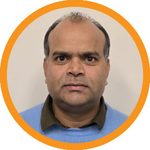
I am a Principal Medical Physics Specialist at Western NSW Local Health District with more than 20 years’ experience in radiation oncology medical physics. My expertise includes SBRT, SRS, image-guided radiotherapy, motion management, treatment planning optimisation, quality assurance and commissioning of advanced radiotherapy technologies.
I provide medical physics leadership for radiotherapy clinical trials across Central West Cancer Care Centre and Western Cancer Centre Dubbo and have led numerous clinical implementation and commissioning projects across regional NSW.
I played a leading role in establishing the radiotherapy service at Western Cancer Centre Dubbo, including facility design and commissioning of the linear accelerator, PET-CT simulator, orthovoltage unit, oncology information system and treatment planning system.
I also established a regional ROMP TEAP program and successfully secured four competitive training grants to support registrar positions. Through clinical leadership, research and multidisciplinary collaboration, I continue to improve access to high-quality, advanced radiotherapy services for regional cancer patients.
Presentation: Consumer perspective on challenges and opportunities for accessible radiotherapy
Regional radiotherapy services play a critical role in improving equitable access to high-quality cancer care, but face unique challenges including workforce recruitment and retention, geographic isolation, competing priorities, limited resources and access to clinical trials.
This presentation will share the experience of the Western NSW Local Health District in developing a regional radiotherapy service capable of delivering advanced techniques including SBRT, SRS, 4DCT, image-guided and adaptive radiotherapy. It will highlight how innovation, research, collaboration and workforce development can help regional centres overcome these challenges and create new opportunities for growth.
Particular focus will be given to participation in clinical trials, including practical experiences of establishing trial workflows and recruiting patients in regional centres.
The presentation will explore how regional services can move beyond providing equitable treatment access to becoming active contributors to research, innovation and clinical practice improvement.
Dr Trang Nguyen

Dr Trang Nguyen is the Founder and CEO of SeeTreat Medical, creator of ART.1 — an adaptive radiotherapy platform cleared across the EU, UK, Australia, Singapore, and the US, and deployed in 40+ radiation oncology centres. With 15+ years in medical physics and biomedical engineering, she is an inventor of Kilovoltage Intrafraction Monitoring (KIM), a real-time tumour tracking technology validated through the SPARK trial (TROG 15.01) and backed by NHMRC, Cancer Institute NSW, and Cancer Australia funding. A former clinical AI lead at Harrison.ai, Dr Nguyen has authored numerous peer-reviewed publications and continues to shape the future of AI-driven precision cancer care.
Presentation: The KIM journey, from concept to globally available product
This talk traces Kilovoltage Intrafraction Monitoring (KIM), a real-time tumour tracking system, from ideation through clinical trials (SPARK, TROG 15.01) to commercialisation as a regulator-cleared medical technology.
Using KIM as a case study, we explore the substantial gap between a working prototype and a market-ready product, spanning quality management systems, regulatory strategy, manufacturing rigour, and commercial infrastructure.
Dr Emily Hewson
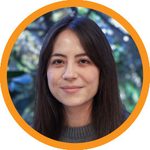
Dr Emily Hewson is a Research Fellow at the Image X Institute, The University of Sydney. Emily’s research specialises in real-time motion management for radiation therapy which has included word first experimental demonstrations and implementation in a multi-institutional clinical trial. Her current focus is on developing MLC tracking techniques to maximise the accuracy of radiation therapy and improve patient outcomes.
Presentation: The future roadmap of accessible adaptive radiotherapy technology
While radiation therapy has continually advanced since its inception, leading to significant improvements to patient outcomes over the years, many of these improvements depended on adopting new equipment. Transitioning to new equipment can be costly, and specialised systems are often too expensive to be made widely available. The future roadmap to accessible, advanced radiation therapy will increasingly see developments that focus on repurposing existing hardware technology to expand access to safe, effective radiation therapy. Software-based innovations are striving to align treatment decisions more closely with patient outcomes. Approaches like dose-guided and functional-guided radiation therapy, along with incorporating more comprehensive patient information, will enable more personalised, outcome-driven treatment.