
-
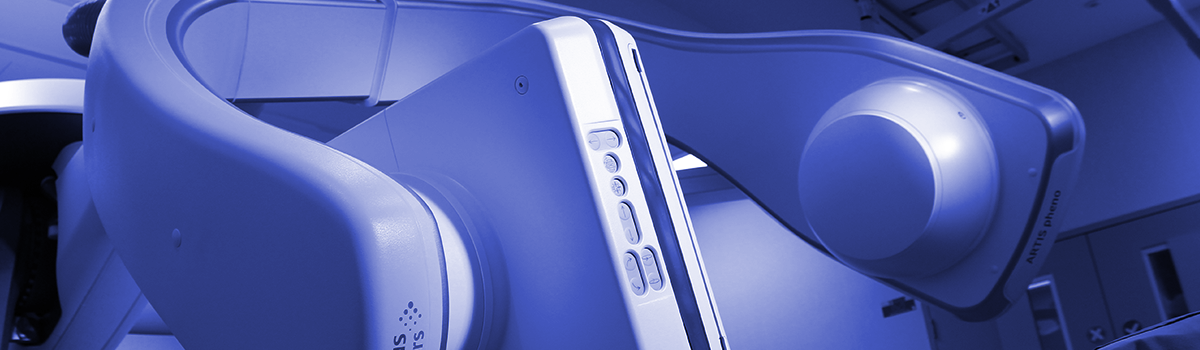
Improved 4D CBCT image acquisition
The problem to be solved Lung cancer is the leading cause of cancer death worldwide. Better targeted radiotherapy will improve treatment outcomes: a 1-Gy increase in tumour dose results in a 4% improvement in survival and a 1-Gy decrease in lung dose results in a 2% reduction in pneumonitis. To achieve tumour dose increase and…
-
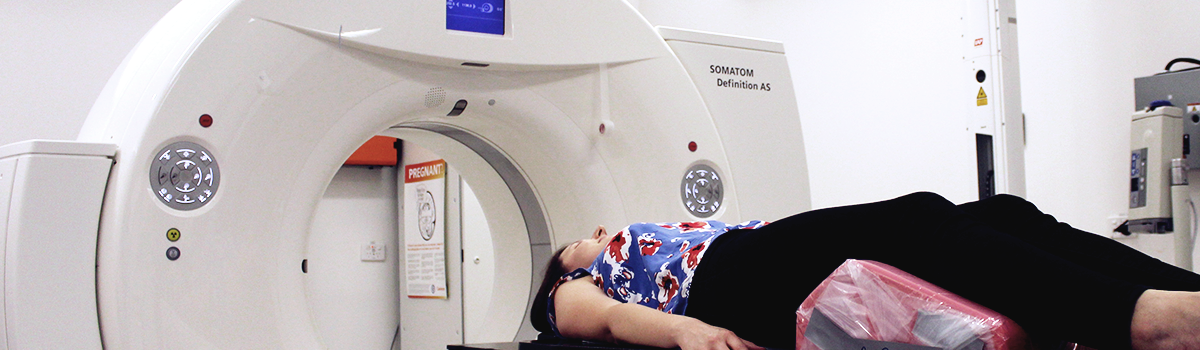
Respiratory Adaptive Computed Tomography (REACT)
Clearer lung cancer images, on standard CT Imagers. Current Results Milestones Intellectual property Keall, P.J. and J.F. Williamson, Method and system of adaptive control for reducing motion artifacts and patient dose in four dimensional computed tomography. 2013 Publications N. Morton, P. Keall, R. O’Brien and T. Reynolds, “CArdiac and REspiratory adaptive Computed Tomography (CARE-CT): a proof-of-concept…
-
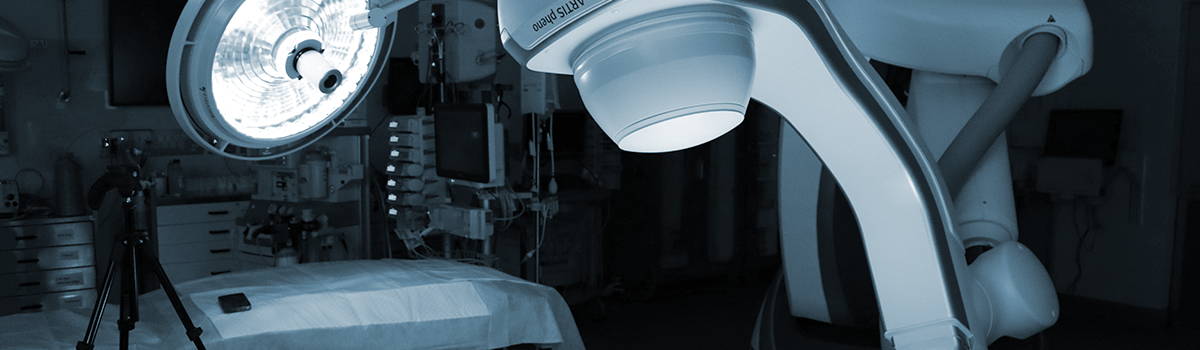
ACROBEAT
Safer, Faster, Clearer Imaging. What if we adapted the imaging equipment to the moving patient, rather than making the patient conform to the limitations of the equipment? Acquiring images only when the heart and lungs are in perfect position would result in clearer images, and no unnecessary radiation dose to the patient. We’re creating imaging…
-
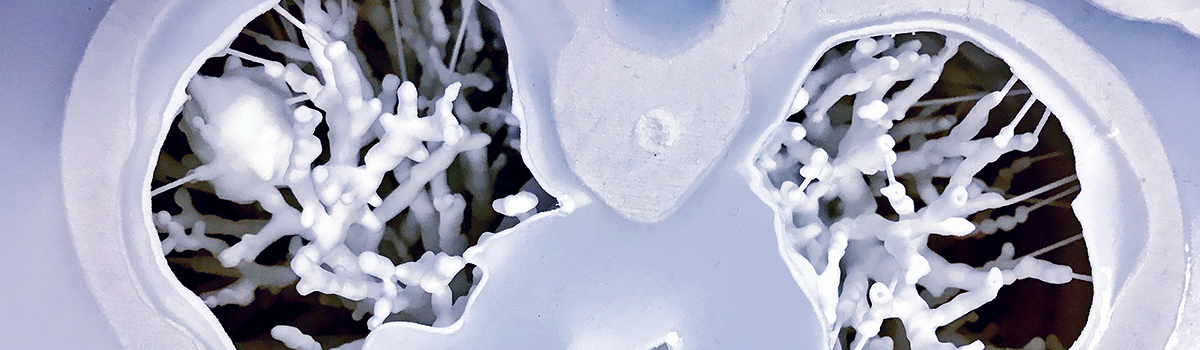
CT Ventilation Imaging
CT Ventilation Imaging is software that shows us how well different areas of the lung are performing. This means we can make sure we protect the healthy areas during radiation therapy. Cancer and lung function. For people with lung cancer, there are numerous factors other than the cancer itself which can seriously impact on the…
-
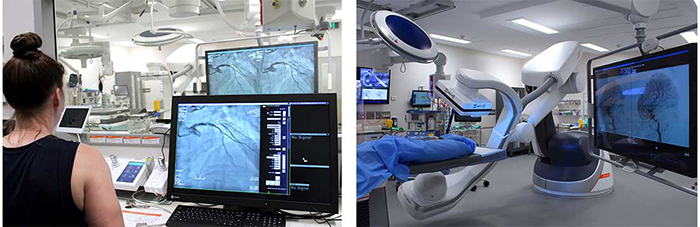
The Patient Connected Imaging Program
By connecting the patient’s physiological signals to imaging acquisition, we can ensure clearer images, lower imaging dose and faster acquisition. The Patient Connected Imaging Program is a suite of projects which use the patient’s respiratory or cardiac signals to improve the images we can achieve across different imaging techniques. REACT Clearer lung cancer images, on…