
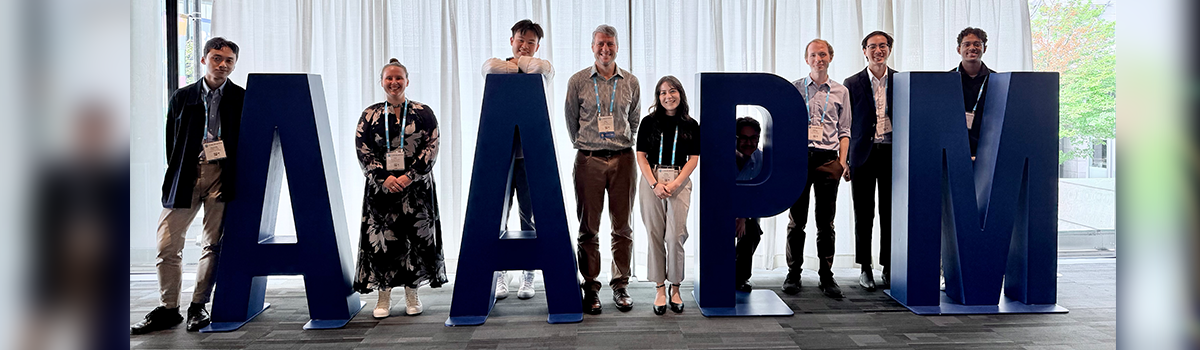
Members of the Image X team recently travelled to Vancouver for the AAPM Annual Meeting, joining medical physicists and researchers from around the world to exchange ideas and present their latest work. The team contributed to important conversations about the future of radiation oncology, and found some time to explore Vancouver along the way.
We asked Jonathan Hindmarsh Gregory Willson, Zhuang Xiong, Tess Reynolds and Jeremy Lim to give us an overview:
What did you present?
Jonathan: I had a poster presenting recent work using a systems engineering method to develop a quality management program for markerless lung tumour tracking. I also organised a symposium on patient safety using hazard analysis where I presented a systematic review + update on the applications of hazard analysis in radiation oncology.
Gregory: Real-time Liver cancer localisation on kV projection images.
Zhuang: Markerless liver tumor tracking using AI based on radiopaque contrast agent.
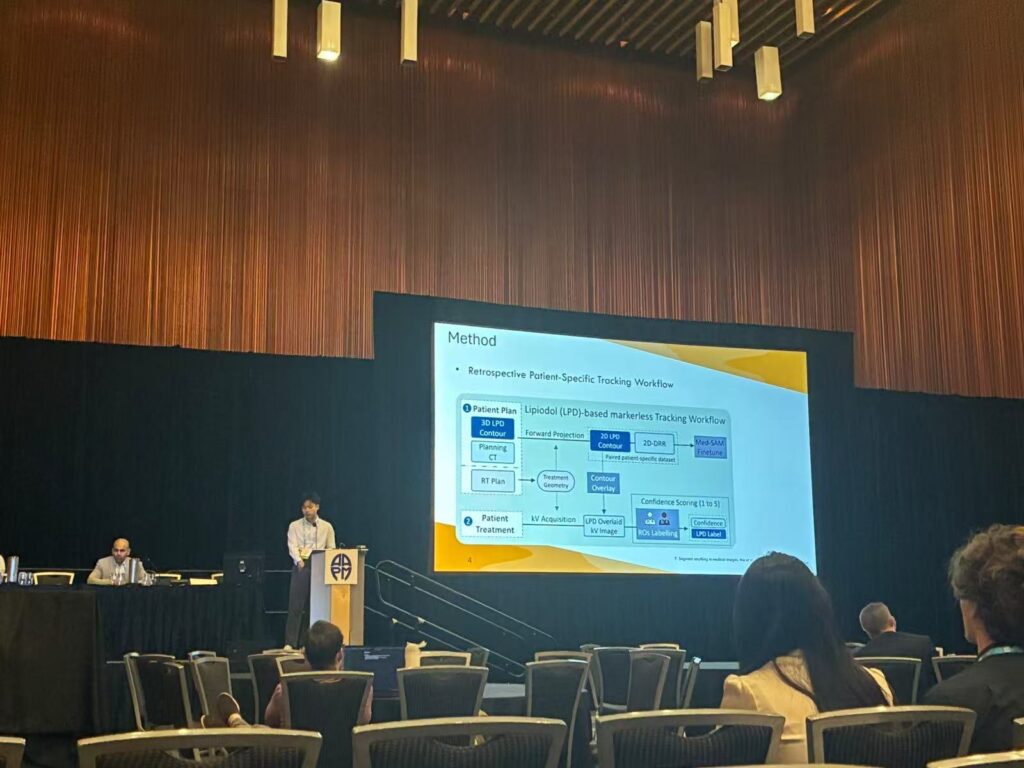
Tess: I presented on new Dual Energy CBCT imaging, brining functional information to the point of intervention, expanding the clinical utility of interventional CBCT.
Jeremy: I presented a poster on low-dose CT ventilation imaging, showing that ventilation images generated from low-dose scans remained strongly correlated with standard-dose images, supporting the potential for lower radiation dose while maintaining image quality.
What was your conference highlight?
Jonathan: Catching up with former colleagues from my time in Calgary; being able to discuss my research with a variety of people; being a part of a symposium with researchers I reference continuously but have never met.
Gregory: Eating a $80 steak with Alen Biju! If that is not appropriate, motion management talks and networking. [ED: Gregory we love this honesty! NB: Steaks were funded by the individuals]
Zhuang: As a first-time attendee, it was amazing to experience the scale of the conference and connect with so many experts in the field!
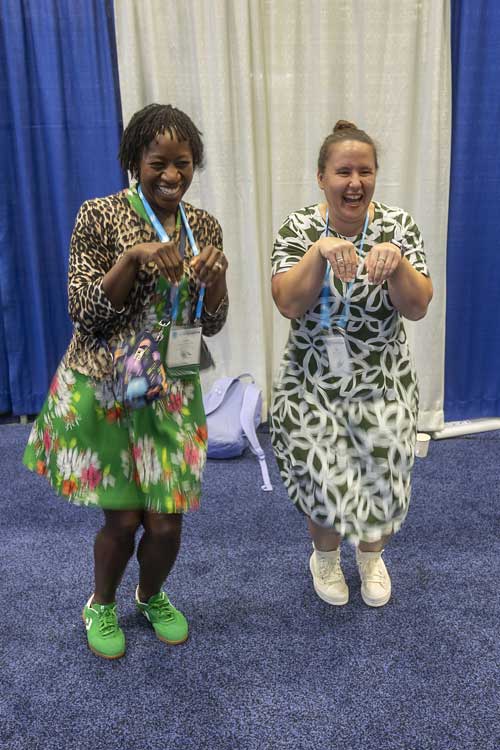
Tess: Catching up with friends and mentors who inspire, support, challenge, and kangaroo hop to help become the best physicist you can be!
Jeremy: Presenting my poster was definitely a highlight, I had lots of great discussions with people who stopped by with questions about my research. It was also fantastic to connect with researchers including Peter Noël, who developed the PixelPrint technology used in much of my work, as well as lung ventilation researchers from UMC Utrecht, the University of California, and Western University, followed by post-conference visits to the Verspeeten Family Cancer Centre and Robarts Research Institute.
What was your main takeaway from AAPM?
Jonathan: AI is here but, as an industry, we are stuck in the past regarding how to keep these systems safe. Too many talks referred not to the safety of an AI-based system but to the quality metrics and/or reliability of the AI-based system. This greatly concerns me as I believe we are setting ourselves up for potentially devastating events if we don’t appropriately consider safety.
Gregory: The work we are doing at ImageX is clinically meaningful and is at the forefront with other top academic institutions. Gives me confidence in the direction of my work.
Zhuang: AI integration in radiotherapy planning and tracking is advancing rapidly, but rigorous clinical QA and real-time precision remain key.
Jeremy: AAPM was a great reminder of how important it is to share your work and engage with the wider community. Presenting my research, receiving feedback, and learning about the work being done at other institutions was an invaluable experience.
Any recommendations for someone going to Vancouver, and/or the next AAPM conference?
Jonathan: Visit Stanley Park, either walk or ride around the sea wall; hike the Grouse Grind, take your time on the walk up and enjoy all the free events up the top (bird show, woodchopping show, bear enclosure); check out the craft brewers all around Vancouver.
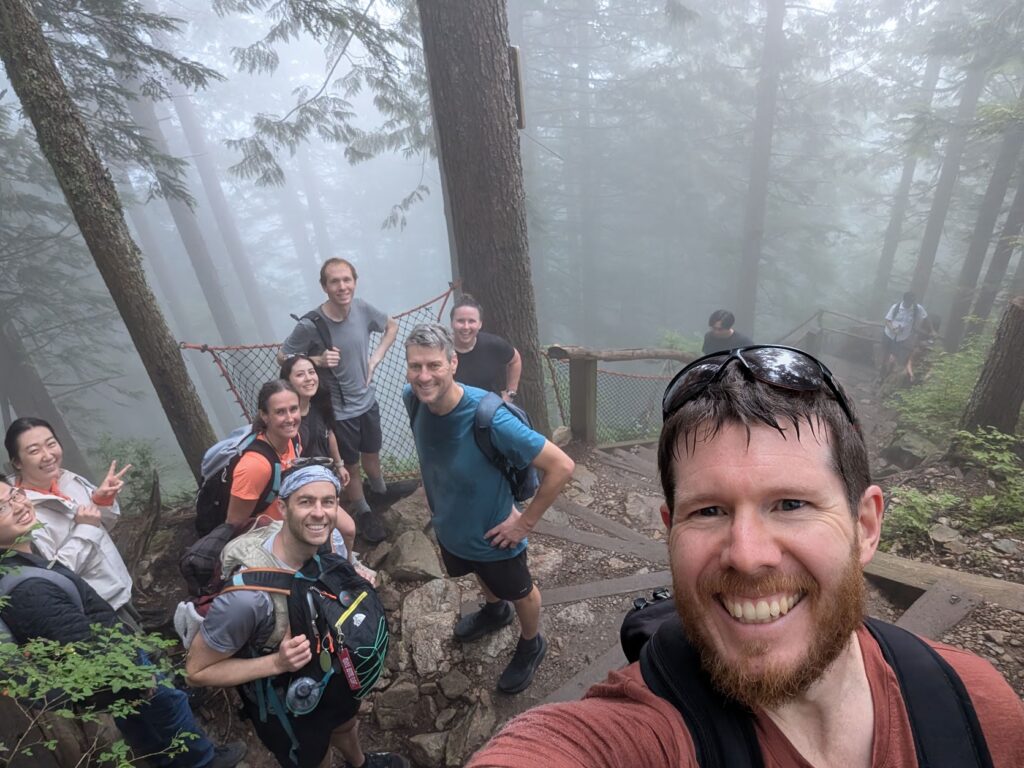
Gregory: Bring hiking shoes up the Grouse Grind…
Zhuang: For people with a BME and AI background like me, I recommend balancing talks directly related to your research with broader fundamental educational sessions to get a well-rounded picture of medical physics. Also, plan your visit for late July or August for better weather because it often rains otherwise. Plus, outdoor gear like Arc’teryx is much cheaper over there than in Australia, so leave some space in your luggage!
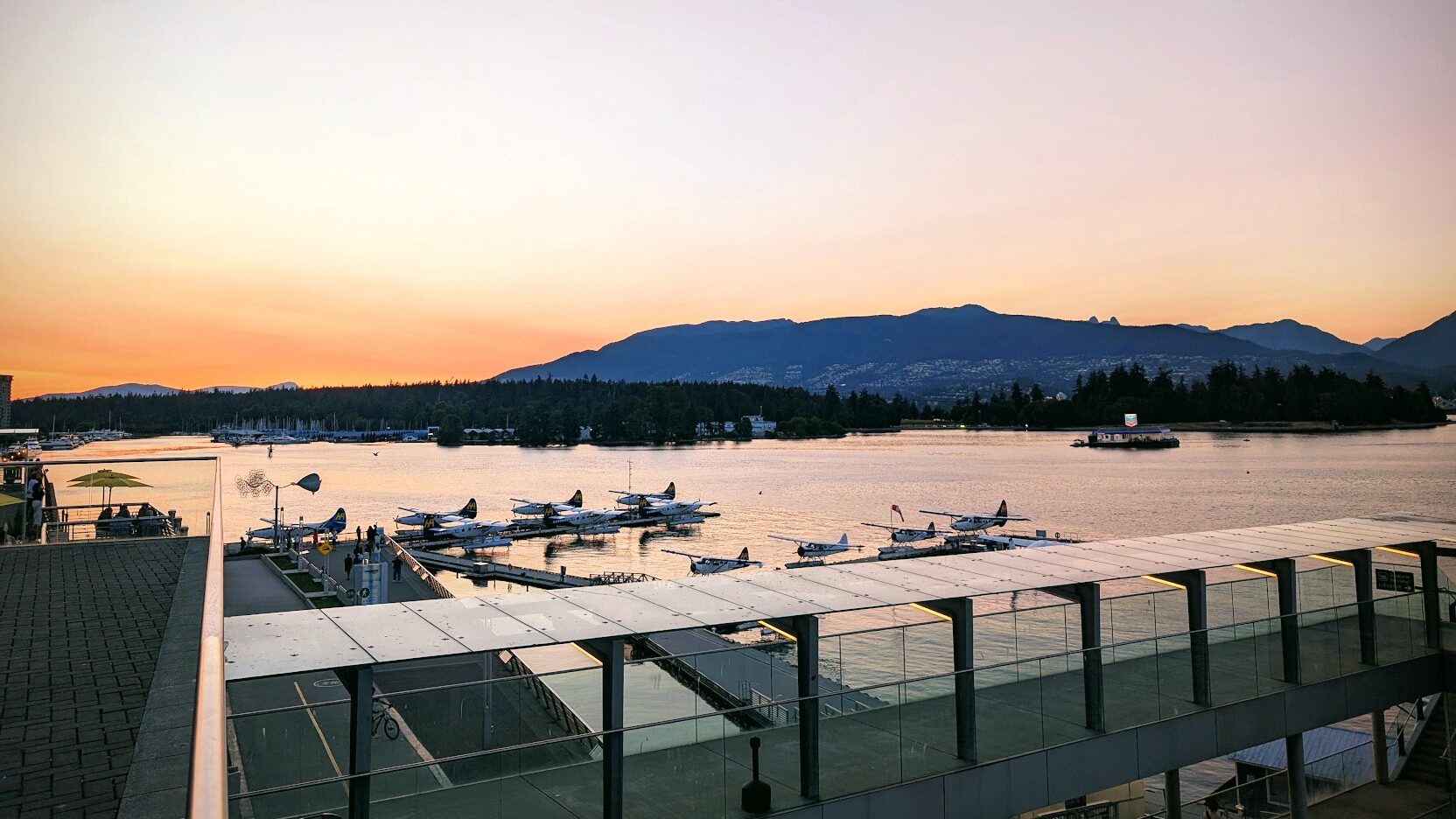
Tess: Get out an enjoy the fresh mountain air up at Grouse Mountain, a short commute over at North Vancouver (visible from the conference centre).
Jeremy: Vancouver is a beautiful city, so try to find some time between or after conference sessions to explore. I’d recommend renting a bike to cycle around Stanley Park and see the totem poles, taking the Aquabus to visit the Granville Island markets, and watching the sunset at English Bay.
As it does every year, AAPM offered valuable opportunities for the team to share new ideas, build connections and see Image X’s research within the broader international landscape.
Across their different areas of work, a common message emerged: AI and advanced imaging technologies are developing quickly, but their clinical impact will depend on safety, quality assurance, precision and engagement with the wider medical physics community.
The team’s attendance was supported through several sources. Tess Reynolds attended with support from her NHMRC Investigator Grant, with other attendees attendance supported through Professor Paul Keall’s NHMRC Investigator Grant and/or Image X Institute.